
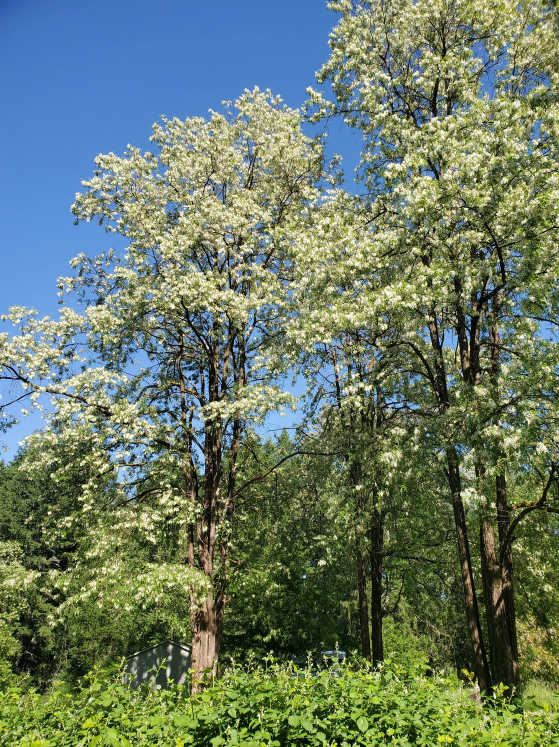
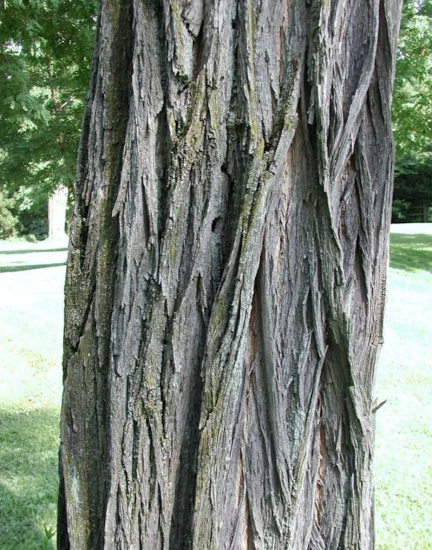
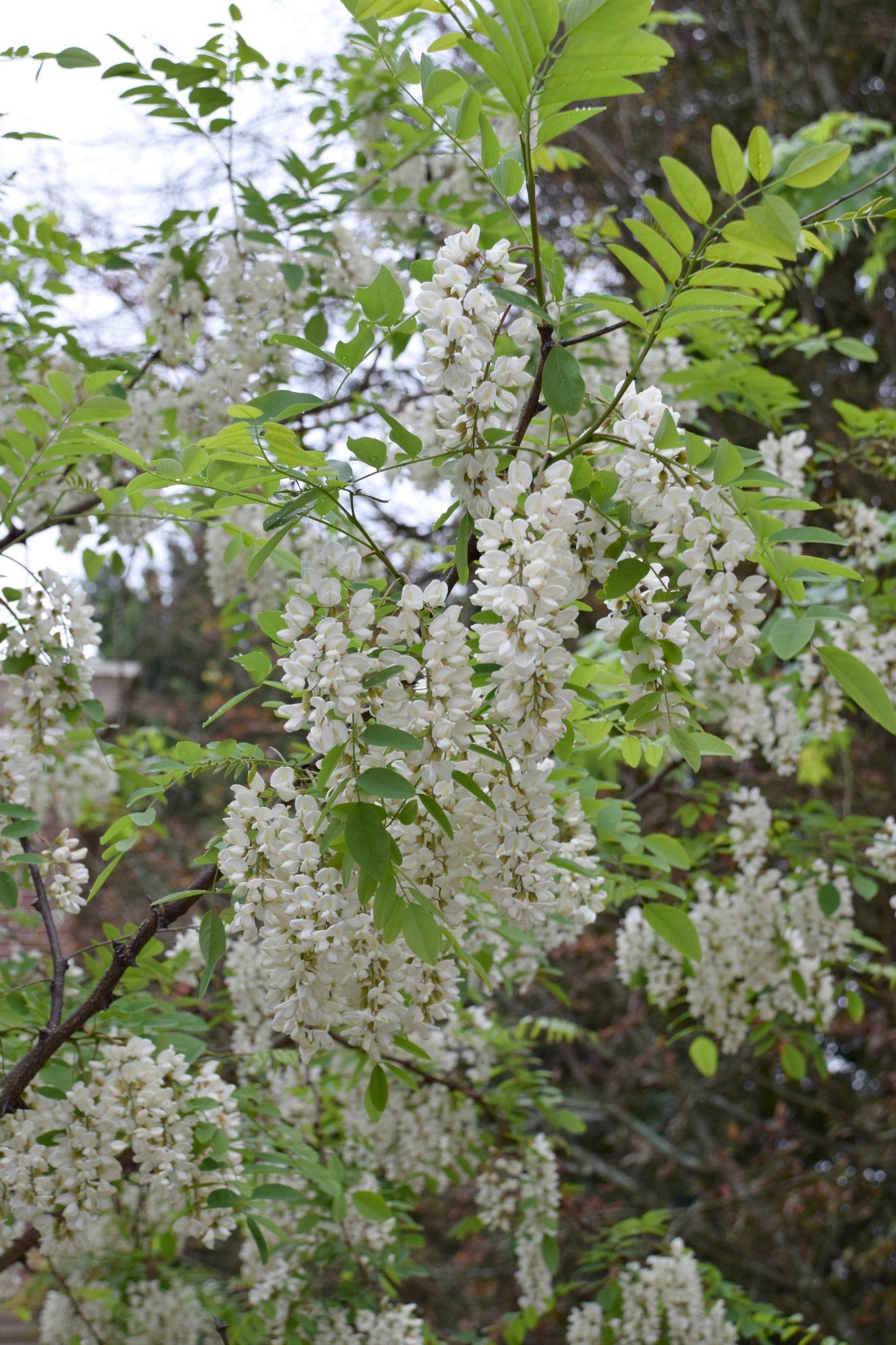
Black Locust (Robinia pseudoacacia)
Black locust is a fast-growing native tree valued for its toughness, adaptability, and fragrant spring flowers. In cities like Buffalo, it is known for its ability to tolerate poor soils, drought, pollution, and difficult urban conditions where many other trees struggle. Its durable wood and nitrogen-fixing roots also make it useful in restoration and low-fertility sites. While highly resilient, black locust is best planted in areas where its spreading habit and occasional suckering can be managed.

Key Features:
Fragrant white flower clusters in late spring that attract pollinators
Extremely tolerant of poor soils, drought, and urban stress
Nitrogen-fixing roots improve soil quality over time
How big will I grow?

30-50 ft

20-35 ft
How to Care for Me?
Black locust grows best in full sun and adapts to a wide range of soils, including sandy, rocky, compacted, and low-fertility sites. Water regularly during the first 2–3 years to establish a healthy root system. After establishment, watering is typically only needed during prolonged drought. Prune in late winter to remove weak, damaged, or crossing branches and to maintain good structure. Species spread by their root suckers and by self seeding. Remove them promptly as they appear unless naturalization is desired.